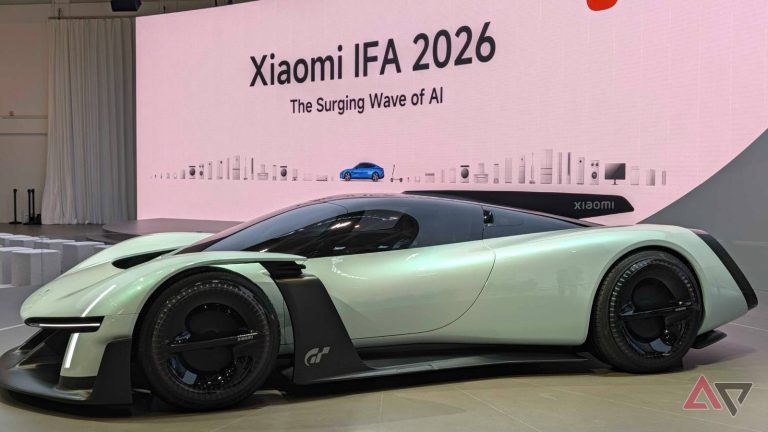
The IFA 2026 technology show has been the launchpad for a variety of exciting mobile devices, from the Huawei Watch D3 with its blood pressure cuff in the strap, to the first limited-edition phone from Tecno and Tonino Lamborghini.
However, this year, the show made a distinct push into what it calls “mobility,” which covers everything from scooters to full electric cars.
It’s a bigger deal than you think, not only from the point of view of IFA, but also the range of products from some brands you may know from mobile, signaling a shift in both the show and the products that brands see as the future.
IFA becomes a mini CES
Planes, tractors, and automobiles

Anyone who has attended or watched the IFA and CES technology trade shows closely over the past years will have a solid idea of what each show is all about.
Many will have noticed CES’s shift toward mobility in recent years. Big-name automotive brands have attended, airlines have made announcements there, and attendees have seen helicopters and even boats on the show floor.
This year, IFA also seems to have driven (if you’ll forgive the pun) in this direction, but not on the same scale as CES. Instead, personal and city mobility is having a moment in the spotlight in Berlin, rather than John Deere’s farming tech or Delta’s AI travel plans.
Familiar names going mobile
But not with phones

Several big names have revealed or demonstrated mobility products at IFA 2026. Xiaomi is the brand channeling CES’s direction the most, while remaining true to IFA’s traditional focus on smart home products.
As part of its Human x Car x Home ecosystem, the company displayed its SU7 electric car and the Vision GT at its booth, announced agreements with car dealers, launched its Xiaomi Auto website in Europe, and confirmed its cars will be released in the region in 2027.
Xpeng, an electric carmaker, used IFA to showcase its range of cars and fully embraced the tech trade show clichés of demonstrating a humanoid robot and a modular flying-car concept.
Volkswagen is also at IFA, but not with a specific vehicle. Instead, it’s engaging people with unusual creative installations, concerts, and 3D printer and cooking demonstrations, all powered by electric vehicles.
After announcing the eBike in July, N+ demonstrated the VW Smart eBike for the first time at IFA, and visitors can test the bike at VW’s stand.
Sharp is at IFA with its largest range of eBikes yet, covering city, cargo, and folding models. It also talked about mobility-related tech, including semi-solid-state batteries for longer range and lower weight.
Scooters, smart mobility, and exoskeletons
Further cementing the trend
It’s not only major brands flexing their mobility might at IFA. Urbanglide and isinwheel are also showing eBikes, while Acer — a brand better known for laptops — has used IFA to show its most powerful electric scooter, the Predator ES Thunder Pro. It’s out early next year.
Razer, never afraid to try new things, partnered with Niu Technologies to make the FQiX x Razer Special Edition electric scooter. Acer and Razer’s scooter efforts show that companies are watching personal mobility trends closely.
Navee, a brand specializing in scooters and electric golf buggies, launched the Fold P10, a folding electric scooter, and its new exoskeleton range.
This is another mobility trend at IFA. HyperShell, probably the best-known brand in the exoskeleton space, revealed HyperShell Halo, its all-terrain, full-leg exoskeleton. Ascentiz showed a modular exoskeleton, and AlpWalk had a hip-assistive exoskeleton.

Exoskeletons are a common sight at trade shows, but products like the Strutt EV1C are not, and its presence at the show underlines IFA’s shift towards smart mobility. The EV1C is a quad-drive, modular smart vehicle covered in sensors and cameras, designed to navigate cities autonomously.
IFA reinventing itself
While brands diversify
The IFA trade show has never traditionally been a “mobile” show, at least in terms of multiple, major new smartphone releases. IFA was the show for televisions, audio, smart home, and occasionally wearables.
IFA has seen how CES has changed over the last few years and is now deep into reinventing itself in a similar vein. However, it wouldn’t be able to do this if demand wasn’t there from companies wanting to show off mobility-related products.
The continued trend is evident in the reintroduction of IFA’s Mobility Test Track, which it tested the waters with last year, where attendees can try electric scooters, eBikes, and other personal mobility products safely in real-world conditions. CES has had space for electric vehicle testing for a while.
This isn’t to say IFA 2026 hasn’t been great for mobile fans. The Poco F9 Pro and Poco F9 Ultra kicked things off ahead of the show opening, followed by announcements from Tecno, Circular, and Xiaomi among others.
After a few years of struggling to find its identity again, IFA seems to have found its feet. The 2026 show looks like the most varied and interesting it has been since before 2020, even if it wasn’t all about phones and smartwatches.
PakarPBN
A Private Blog Network (PBN) is a collection of websites that are controlled by a single individual or organization and used primarily to build backlinks to a “money site” in order to influence its ranking in search engines such as Google. The core idea behind a PBN is based on the importance of backlinks in Google’s ranking algorithm. Since Google views backlinks as signals of authority and trust, some website owners attempt to artificially create these signals through a controlled network of sites.
In a typical PBN setup, the owner acquires expired or aged domains that already have existing authority, backlinks, and history. These domains are rebuilt with new content and hosted separately, often using different IP addresses, hosting providers, themes, and ownership details to make them appear unrelated. Within the content published on these sites, links are strategically placed that point to the main website the owner wants to rank higher. By doing this, the owner attempts to pass link equity (also known as “link juice”) from the PBN sites to the target website.
The purpose of a PBN is to give the impression that the target website is naturally earning links from multiple independent sources. If done effectively, this can temporarily improve keyword rankings, increase organic visibility, and drive more traffic from search results.
Streaming Film
Nonton Film gratis
Jasa Backlink
Download Anime Batch
